
Lee County Jail Release Paths
The Lee County Sheriff's Office operates the Criminal Justice Center. A person can leave through bond, recognizance, court order, dismissal, time served, sentence completion, or earned-time release on an eligible county sentence. Those events may end custody in the community. Other exits lead to GDC, a federal authority, another county, or an agency acting on a detainer. A detainer is a request by another authority to hold or transfer a person. In that case, release from the jail ends only the Sheriff's custody.
The local release record should state the date, time, and reason recorded by the jail. It may also name a receiving agency. That detail changes the next search. A transfer to GDC leads to the state offender search. A federal pickup may lead to a federal court docket and later the BOP locator. An immigration transfer calls for the ICE detainee locator. If the record says bond or court order, the relevant Lee County court file explains the legal action while the jail record confirms when the person physically left.
| Recorded exit | Likely next place | Next check |
|---|---|---|
| Bond or recognizance | Community under court terms | Jail release record and Magistrate or Superior Court |
| Time served or sentence end | Community unless another hold applies | Release record and sentencing order |
| Transfer to GDC | State corrections custody | GDC Find an Offender |
| Federal or ICE pickup | Receiving federal custody | Jail record, federal court, BOP, or ICE ODLS |
| Other county or agency | Named receiving authority | That authority's official custody source |
Confirm Lee County Jail Releases
Citizen Connect Inmate Confinements is the public county starting point. It contains Current Confinements and admission searches with date, charge, and arresting-agency controls. The Last 24 hours option refers to recent admissions or booking activity, not an official list of people released in that period. The portal also limits custom date ranges to 31 days. That is an online search limit, not a record-retention rule.
- Search Current Confinements using the person's correct name. A match points to present local custody.
- Check Admits by Date Range and the Arrest Search to identify the booking event.
- If the name is gone, check Georgia VINE for a custody result or status notice.
- Review the court file for bond, dismissal, sentence, or other disposition.
- Request the Sheriff's booking and release record for the exact exit date, reason, and recipient.
- When a transfer is listed, search the receiving agency before concluding that custody ended.
The Jail Releases: 24 Hours page explains the honest same-day workflow when Citizen Connect shows recent admits rather than a release-only feed. The broader Lee County released inmate search compares county, state, supervision, VINE, court, and federal channels for a named person.
Lee County Jail Release Records
The Lee County Open Records page routes Sheriff's Office records, arrest records, and police reports to the Sheriff's Office. A useful request identifies the full name, date of birth, approximate booking date, and requested fields. Ask for booking number, booking and release date and time, release reason, bond status if recorded, court or case number, arresting agency, and receiving agency if transferred.
Lee County Sheriff's Office Records119 Pinewood Road
PO Box 610
Leesburg, GA 31763
Phone: (229) 759-3334
Office hours: Monday-Friday, 8:00 a.m.-5:00 p.m.
The county says the first 15 minutes of work are free. Letter or legal copies cost $0.10 per page. Search, retrieval, copying, redaction, inspection supervision, or other media costs may apply, and payment is due upon receipt. A clerk or department representative should make contact within three business days with a timeline. The three-day rule concerns response and scheduling, not guaranteed delivery of every record.
Georgia's Open Records Act permits access unless a law, exemption, or court order limits disclosure. Narrow requests are easier to process. If a record is redacted or withheld, the office can identify the basis that applies. Restricted, sealed, juvenile, victim-sensitive, or active-investigation information may not be available in the same form as an ordinary booking and release entry.
Lee County Jail Bond Releases
The Lee County Magistrate Court handles bond hearings and preliminary hearings. The jail handles the actual custody exit. A Magistrate record may show the bond event or initial case step, while the Sheriff's release record supplies the release time and reason. Bond does not dispose of the charge. It permits release under stated terms while the case proceeds.
Felony matters may later appear in Lee County Superior Court. Magistrate Court is not a court of record, and Superior Court holds felony records through its clerk. Search both when the case began with an initial bond hearing but later moved to a felony docket. A jail release and a final court result can occur months apart, so dates should be matched to the correct event.
- Bond release
- Custody ends under court-set financial or other terms while the case continues.
- Recognizance
- Release occurs on a promise to appear, subject to the court's terms.
- Disposition
- The court's recorded outcome, such as dismissal, plea, sentence, or another ruling.
Lee County Jail Custody
The official Sheriff's page describes the Criminal Justice Center as a 109-bed facility. It primarily holds people charged with offenses while they await court appearances, people found guilty of certain misdemeanors and sentenced to one year or less, and sentenced people waiting for transfer to state or federal custody. That mix explains why no single release route fits every name.
The Sheriff's official facility description can help distinguish the county jail from the nearby state prison:
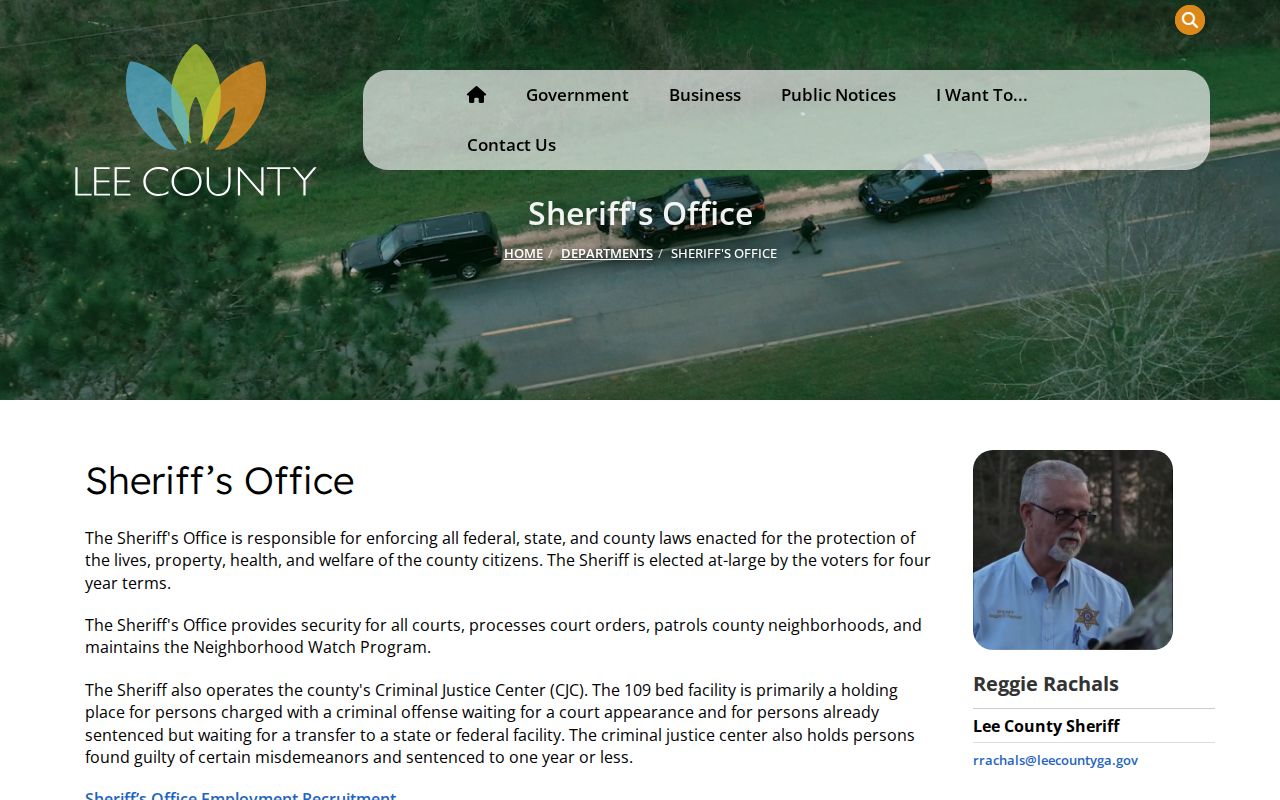
The county facility serves pretrial, short county-sentence, and transfer populations. Its release records are therefore local jail records, even when the next stop is a state or federal institution.
Two Pinewood Road Custody Systems
Lee County Jail and Lee State Prison sit near one another on Pinewood Road. That local geography can mislead a person who knows only that someone was held “on Pinewood Road” or “in Lee.” The Sheriff's Office operates the county Criminal Justice Center at 119 Pinewood Road. GDC operates Lee State Prison at 153 Pinewood Drive. They have different populations, records, and release channels.
A county booking number belongs with Sheriff's records and Citizen Connect. A GDC ID belongs with the state offender record. If the jail says the person transferred to GDC, the Lee County release entry marks the handoff. It does not prove the person entered Lee State Prison in particular, nor that the state later discharged them. Follow the GDC record from that point.
Lee County Jail Transfer Checks
Transfers deserve a separate check because they look like release in the sending agency's system. For a GDC transfer, search GDC Find an Offender by name, GDC ID, or known case details. For federal sentencing, use the BOP locator once the person is designated, along with the federal court record. USMS handles federal pretrial custody and transport but lacks a broad public locator comparable to BOP.
For an immigration hold, use ICE ODLS and the jail record that names the recipient. No official source identifies Lee County Jail as an ICE contract facility. Immigration custody is a possible receiving path, not the jail's main role. If ODLS produces no result, use the official ICE field-office or facility contact route rather than assuming release.
Georgia VINE can provide custody status and alerts for participating records, but it is not a certified historical release log. Compare every VINE result with the jail record or receiving agency. A clear chain is simple: local booking, local release or transfer entry, receiving-agency record, then any later release or supervision record.
Timing can create an apparent gap between those systems. The Sheriff's record may show that local custody ended before a receiving database displays the person. Names may also appear in a different format. Keep the booking number, case number, date of birth, transfer date, and named recipient together while checking the next source. Those details help distinguish a routine data delay from a wrong-person match.
If the transfer destination remains unclear, ask the Sheriff's records office for the release-type text and receiving-agency field as recorded. Do not ask a county portal to answer a later state or federal custody question. Once the handoff is identified, the receiving authority owns the current status record. This agency-by-agency method also prevents a state-prison transfer from being described as a Lee County community release.