
Lee County Inmate Release Paths
A release from the Lee County Jail means the Sheriff's Office ended its custody. It does not always mean the person walked free. The jail may release someone on bond, recognizance, court order, time served, sentence completion, or dismissal. A county inmate serving a misdemeanor term may leave when the term ends after any earned-time allowance. Other people leave Lee County custody through transfer to the Georgia Department of Corrections, another county, federal authorities, or immigration custody. The receiving agency then becomes the source for current status.
Agency and custody level matter. The Lee County Criminal Justice Center holds people awaiting court, people serving certain misdemeanor terms, and people waiting for transfer. Lee State Prison is a separate GDC institution. The Americus DCS Field Office supervises some people after release, but it is not a jail. A missing name on Citizen Connect can signal release, transfer, or a change in what the public portal displays. It cannot establish the outcome by itself.
- Time served
- A court credits time already spent in custody toward the sentence.
- Discharge
- Custody or a sentence ends, rather than continuing under that agency.
- Parole
- The Parole Board permits release from prison under state supervision.
- Probation
- A court orders supervision in the community instead of, or after, confinement.
- Detainer
- Another authority asks the holding agency to keep or transfer the person.
Lee County Release Types
The release reason determines which record should be checked next. A bond release points toward the jail record and the court that set or reviewed bond. A state-prison discharge points toward GDC. Parole adds Parole Board and Department of Community Supervision records. A transfer is an end to one agency's custody, not an end to custody as a whole.
| Release type | Meaning | Next official source |
|---|---|---|
| Bond or recognizance | The person leaves jail while the case continues under court terms. | Lee County jail record and the court file |
| Time served or sentence end | The custodial term has been satisfied. | Jail release record, sentencing order, or GDC record |
| Parole | Prison custody ends under Board conditions. | GDC, Parole Board, and DCS |
| Probation | The court places the person under community supervision. | Sentencing court and DCS for felony supervision |
| Dismissal or court order | A court action permits the custody exit. | Jail record and the relevant court |
| Agency transfer | Lee County custody ends, but another agency receives the person. | Release record plus the receiving agency |
A death in custody is also an end-of-custody event, but it is not described as a community release. Exact wording should come from the originating record. Terms such as “released to GDC” or “released to USMS” identify the recipient and prevent a mistaken conclusion that the person is free.
Lee County Release Record Fields
The Sheriff's Office record is the strongest local source for the exact jail exit. Citizen Connect offers current confinement, admission, charge, and arresting-agency paths, but the public controls do not establish every release field. Ask for the booking and release record tied to one person and one booking. That narrow scope helps staff locate the correct event and avoids confusing two people with similar names.
| Requested field | What it establishes |
|---|---|
| Full name and date of birth | The identity tied to the booking |
| Booking number | The unique local custody event |
| Booking date and time | When Lee County custody began |
| Release date and time | When the Sheriff's custody ended |
| Release reason or type | Bond, time served, court order, transfer, or another recorded outcome |
| Bond status | Whether bond was part of the custody exit, if recorded |
| Court or case number | The link to the related judicial file |
| Receiving agency | Where the person went if the event was a transfer |
The release record and court disposition answer different questions. A release record proves when jail custody ended and may state why. A court file can show bond, dismissal, plea, sentence, probation, or later disposition. Neither should be substituted for the other.
Request Lee County Release Records
Lee County's Open Records page directs Sheriff's Office records, arrest records, and police reports to the Sheriff's Office. Requests should identify the person, approximate booking date, record type, and a useful date range. The county says a clerk or department representative will make contact within three business days with a production timeline. That is a response period, not a promise that all records will arrive within three days.
- Identify the full name, date of birth, approximate booking date, and facility.
- Ask for the booking and release record, including date, time, reason, booking number, case number, and receiving agency.
- Send the request to Lee County Sheriff's Office records at 119 Pinewood Road, PO Box 610, Leesburg, GA 31763, or call (229) 759-3334 for the current submission method.
- Review any cost estimate. The first 15 minutes are free, letter or legal copies are $0.10 per page, and other search, redaction, media, or supervision costs may apply.
- Compare the delivered record with the court or receiving-agency record when the reason says bond, court order, or transfer.
Georgia's Open Records Act, including O.C.G.A. §§ 50-18-70 through 50-18-74, permits inspection and copying of public records unless an exemption, court order, or other law applies. Redaction may protect restricted details. Juvenile, sealed, victim-sensitive, and active-investigation material can have limits. The public portal's 31-day search range is only an interface limit. It is not the legal retention period for the underlying jail record.
Lee County Bond Release Records
Bond-out research has two local parts. The Lee County Magistrate Court handles bond hearings and preliminary hearings. The Sheriff's Criminal Justice Center carries out and records the actual custody exit. A bond order can show the judicial basis, while the jail record gives the release time and recorded reason. Both may be needed.
Bond does not decide the final criminal case. It permits release under stated terms while the matter continues. Check the case number, court, and date on both records. If the jail entry and court order appear to conflict, ask each originating office to explain its own document rather than guessing from the roster.
Find Lee County Released Inmates
The strongest search begins with the last known custody level. Lee County Citizen Connect covers local jail activity. GDC Find an Offender covers adult state corrections records. VINE may supply status and alerts from participating agencies. Court records explain bond and case disposition. Federal tools apply only when the person entered federal or immigration custody.
- Search Citizen Connect Inmate Confinements for current custody and recent admissions. Use the name, date range, charge, and arresting-agency paths that are available.
- If the name is absent, check Jail Releases: 24 Hours for the correct local recent-activity method. Absence alone does not prove release.
- Search GDC when a state sentence or transfer is possible. Verify a released or discharged state status and date against GDC Inmate Records.
- Check Georgia VINE for a specific custody result or alert, then compare it with the agency record.
- Review Magistrate Court for initial bond matters and Superior Court for felony disposition.
- Use BOP or ICE tools only when the record points to those systems.
- Request the Sheriff's release record when no public tool gives the exact date, reason, and receiving agency.
The official Citizen Connect landing page shows how Lee County groups inmate confinements, arrest search, daily reports, and other public-safety records. Its matched public interface is shown below.
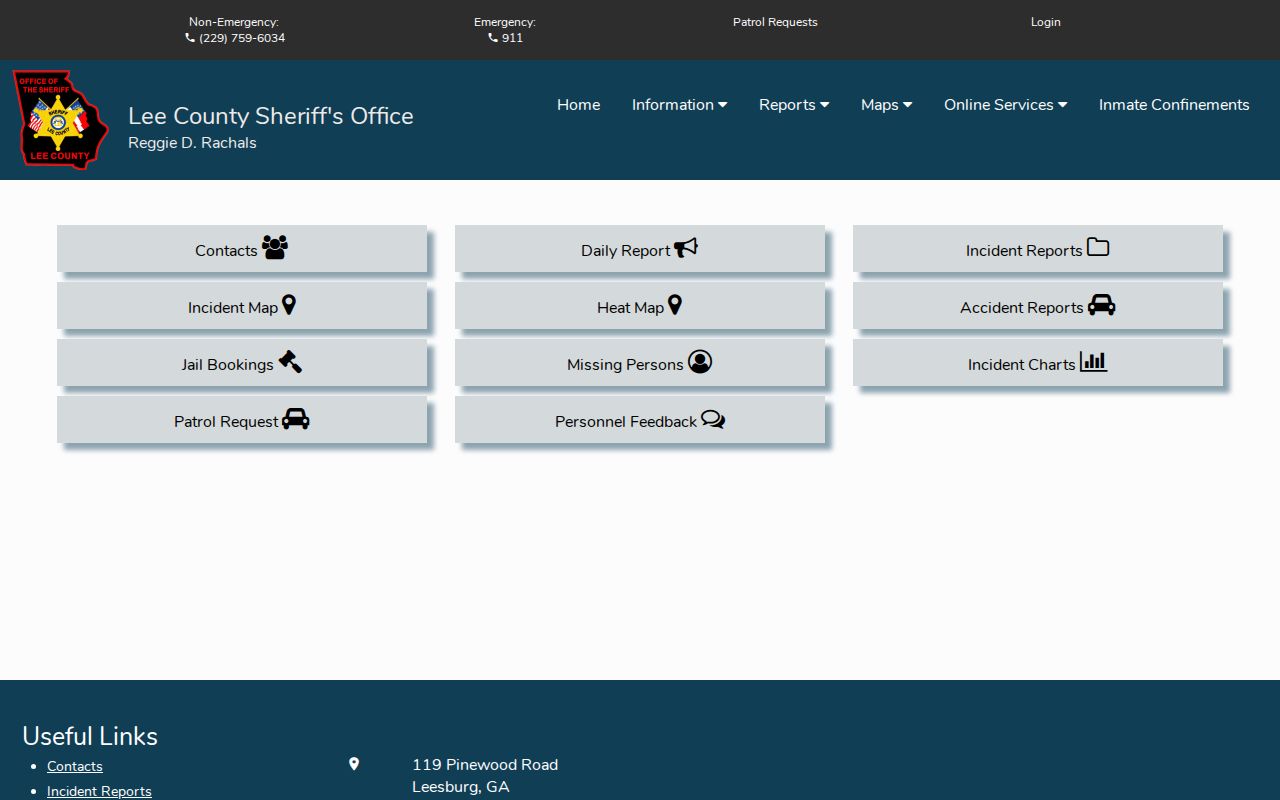
The portal is a useful starting point, but the Sheriff's release record remains the source for an exact local custody exit.
Lee County GDC Release Search
The Georgia Department of Corrections Find an Offender search is the state path for adult offenders in GDC custody or records. It can be searched with a name, GDC ID, case number, age, and identifying details. A county-only jail booking may not appear. The GDC record should be used when the person was sentenced to state prison, moved into GDC custody, or released from a state facility.
| Search field | Best use | Caution |
|---|---|---|
| First and last name | Start when no state ID is known | Compare identity details among similar names |
| GDC ID | Find the state corrections record | Do not substitute a county booking number |
| Case number | Link a known state case | Use the exact format shown in source records |
| Age and identifiers | Narrow possible matches | Available public details can vary |
Look for custody status, facility information, sentence data, and any release or discharge field displayed on the matched record. GDC warns that online information may not be complete. Written verification goes to Inmate Records and Information, PO Box 1529, Forsyth, GA 31029. The GDC contact line for inmate concerns and questions is (404) 656-4661.
The official search form shows the state-level fields and verification warning:
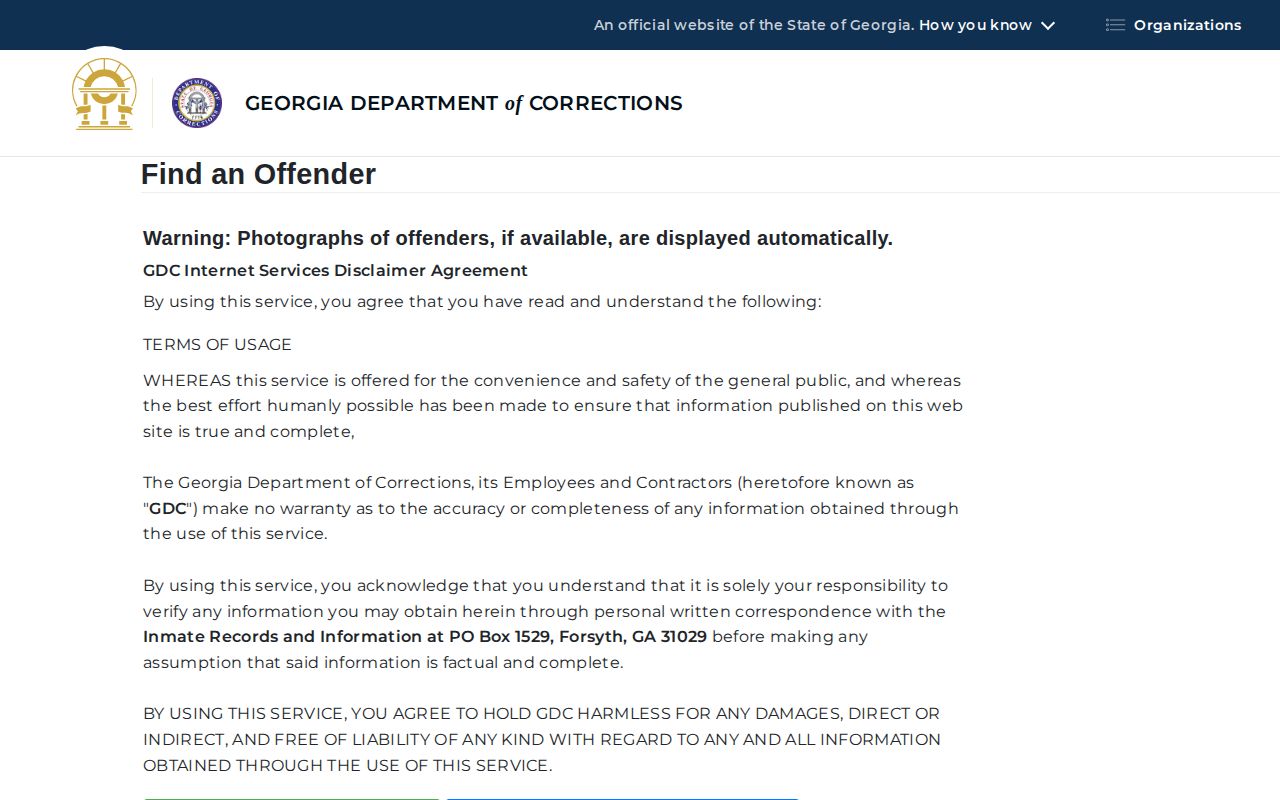
This state record complements the Lee County jail record. It does not replace it for a county-only release.
Lee County Release Court Trail
Lee County's two-court trail is important after release. Magistrate Court handles bond and preliminary hearings but is not a court of record. Felony cases and final felony dispositions belong in Superior Court. A person may have a Magistrate bond event, then a later Superior Court docket. Searching only one can miss the later outcome.
The Lee County Superior Court page identifies the clerk and courthouse access route. Georgia Courts E-Access routes users to provider systems, which may require an account and do not promise that every criminal record is freely available. If an online path is incomplete, contact the Clerk of Superior Court or request courthouse access. A disposition may state time served, probation, dismissal, a prison sentence, or another result that explains what followed the jail release.
Which court should be checked? Start with Magistrate Court for bond and preliminary-hearing records. Use Superior Court for the felony case and final disposition. Match both with the jail booking or case number.
Lee County State Release Funds
A person leaving GDC may receive remaining account funds through the Georgia Release Card. GDC explains that funds left on an offender's books transfer to the card after release. The card can be activated with a PIN and used for ATM or cash-back transactions.
This process applies to a GDC release. It should not be confused with property, funds, or bond procedures at the Lee County Jail. When the last known site was Lee State Prison, use GDC sources for release money questions. When the person left the county Criminal Justice Center, ask the Sheriff's Office about its own release-property process.
Lee County Release Supervision
Release can be followed by supervision. The Georgia State Board of Pardons and Paroles grants parole. The Georgia Department of Community Supervision handles community supervision for parolees and felony probationers. Lee County is served by the Americus DCS Field Office. The Probation & Parole record paths explain how to distinguish a Board release from a court-ordered probation term.
Georgia VINE is a separate custody-status and notification system. Search one person, compare the agency and identity details, and register for a custody-change notice if the participating record offers it. A VINE result may lag or disappear based on agency feeds and retention. It is not a certified release record. For state prisoners, also use GDC. For Lee County Jail, compare VINE with Citizen Connect and Sheriff's records.
Some released people must appear on a specific registry. The GBI Sex Offender Registry applies only to offenses and persons subject to Georgia registration law. It is not a list of all released inmates. Absence from the registry says nothing about a general custody history.
Lee County Federal Release Checks
A county release to the U.S. Marshals Service or ICE is a transfer, not a community release. The BOP Inmate Locator covers federal inmate records from 1982 to the present and may show current custody or release information. BOP warns that sentence recalculation can affect displayed dates. Federal pretrial custody is different: USMS handles detention and transport, but it does not offer a broad public locator like BOP. Federal court records and the Lee County transfer record may be needed before BOP designation.
The ICE Online Detainee Locator System searches current immigration detention by A-number or biographical details. It does not search people under 18 and is not a complete release archive. Lee County has no identified BOP prison or ICE contract detention center. Use these paths only when the jail record, court file, or known custody history points to federal or immigration authority.
Lee State Prison Release Transfers
Lee State Prison operates as a GDC transfer hub and hosts the Albany Transitional Center. A person who leaves that facility may move to another prison or transitional custody rather than discharge to the community. Physical departure from the Pinewood Road prison is therefore not enough to prove release.
Check the GDC offender record, Parole Board record when parole applies, DCS record for community supervision, and written GDC verification. The distinction is especially important because Lee County Jail and Lee State Prison sit close together on Pinewood Road. Their records are not interchangeable, and the same street reference does not identify which agency held the person.
Lee County Release Lookup Sources
Use the system that matches the custody stage. Current rosters answer where a person is held now. Release records answer when one agency's custody ended. Court and supervision records explain legal status after that event.
| Situation | Primary source | What to verify |
|---|---|---|
| Still in Lee County Jail | Citizen Connect Current Confinements | Current local custody and booking |
| Released from Lee County Jail | Sheriff's release record | Exact exit date, reason, and recipient |
| In or released from state prison | GDC Find an Offender | State status, facility, sentence, release, or discharge |
| Under parole or felony probation | Parole Board, DCS, and sentencing court | Supervision type and current office |
| Federal sentence | BOP Inmate Locator | Federal custody or release information |
| Possible immigration detention | ICE ODLS plus jail transfer record | Current ICE detention and receiving authority |
Do not treat a public search as final when agency scope is uncertain. A written record from the office that created the data is the best way to settle an exact date or release reason.
Lee County Release Facilities
Four local or serving pathways define the site's custody map. Each link follows the release trail for that agency rather than treating every Pinewood Road or Lee County record as the same kind of custody.
- Lee County Jail: county custody exits are confirmed through Sheriff's records, Citizen Connect, court files, and VINE.
- Lee State Prison: state release, discharge, parole, and transfer status come from GDC and related state agencies.
- Americus DCS Field Office: this non-jail office serves Lee County parole and felony probation supervision.
- Federal Release: BOP, federal court, USMS process, and ICE custody require separate federal checks.
Begin with the facility named on the newest reliable record. Then follow any transfer or supervision entry to the next agency. That chain gives a sounder result than searching one roster repeatedly after the person has left it.